
The Jíbaro of Borikén: A Taíno-Centered Perspective

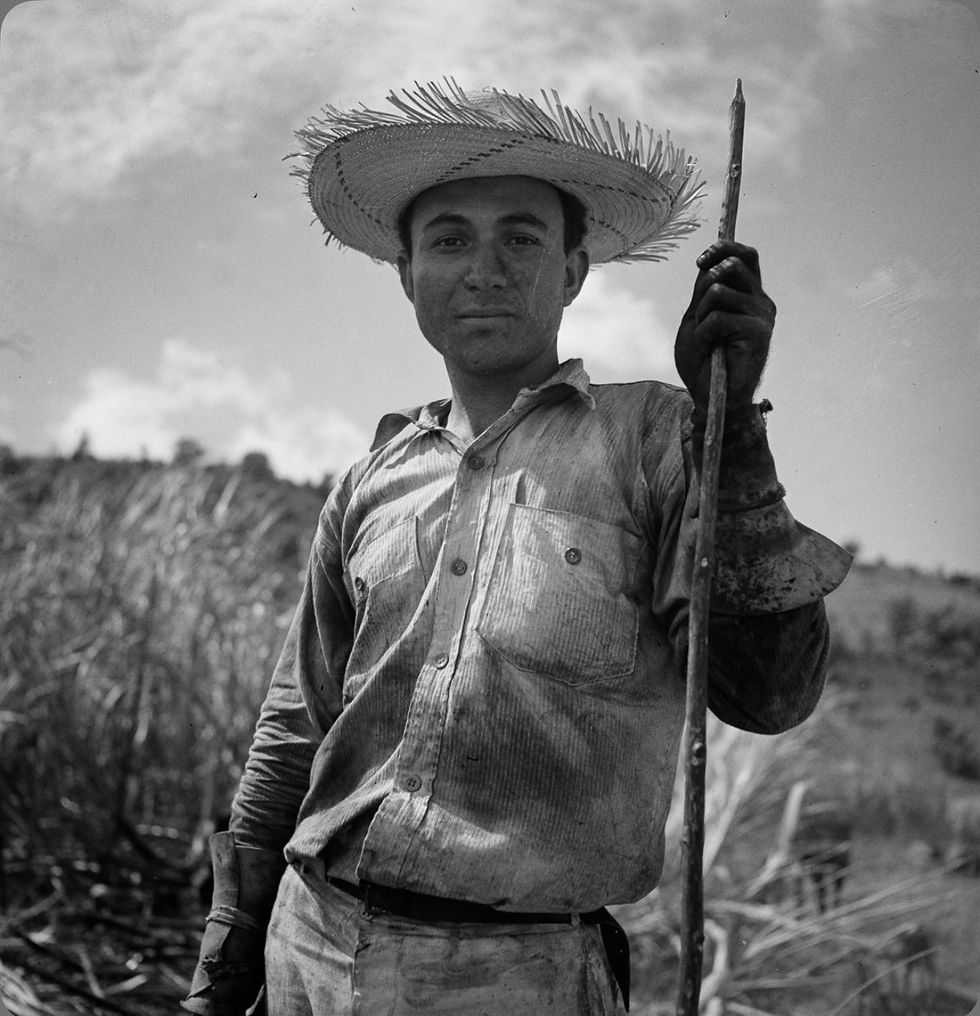
The jíbaro belongs to the mountains and valleys of Borikén. To the land that sheltered generations of our families through conquest, displacement, and colonial rule. Spanish colonial society eventually used jíbaro to describe the rural people of Puerto Rico, sometimes with contempt, associating them with poverty, isolation, ignorance, or lack of refinement. But from a Taíno-centered perspective, closeness to the land was never something deserving shame.
Within Puerto Rico's rural traditions survive profound Indigenous inheritances: relationships with the conuco and the cultivation of yuca and other crops; foods and techniques associated with cassava; knowledge of tropical plants and the healing ways of our ancestors. Often found in a bottle of Isopropyl Alcohol were a mixture of leaves, twigs, and plant matter.
This was the cure all for everything as well as the caladryl infused cheese cloth on your chest for alleviating bronchial congestion to the cure all Vix Vaporub that let everyone know you were sick without letting them know you were sick. If your from the island or have visited family members you might have seen a bottle of alcohol full of twigs and plants. This is the Puerto Rican superpower tincture that can be found in every Jíbaro home.
My grandmother's recipe for "Alcolado" to be used topically.
NOT for drinking:
There isn’t one fixed recipe; families and traditional herbalists have their own versions of this mixture and have adapted indigenous and non-indigenous plants into the mix in modern times. If you dont have a family recipe you can have mine.
Infuse into a bottle of clear, isopropyl alcohol the following natural elements with no set amount. You just feel it and know it. Also, keep in mind that seven is the sacred number for the amount of elements that are to be used synergistically that boost the healing properties.
1) Malagueta (Bay Leaves-pimenta racemosa),
2) Rosemary (romero),
3) Rainbow Eucalyptus,(eucalyptus deglupta)
4) Poleo (Mentha pulegium Pennyroyal),
5) Ruda (Herb of Grace - Ruta graveolens),
6) Cinnamon (Cinnamomum zeylanicum),
7) Yerba buena (Mentha spicata - spearmint).
Common Uses
Pain relief: Rubbed on skin to soothe sore muscles, arthritis, and joint stiffness.
Colds and fevers: Applied via cool compresses or friction baths to help lower fevers or clear nasal congestion.
Native herbal knowledge was necessary for healing in every curandera or curandero's medicine cabinet. The jibaro also knew the rivers, mountains, and seasons; they used the Indigenous place-names; and words such as hamaca, canoa, huracán, and barbacoa that entered Spanish from Indigenous Caribbean languages to describe the world around them because the greateest elements of our Taino language were preserved by our beautiful mountian ancestors.
The jíbaro should therefore not be understood only through the colonial image of the Spanish-descended Puerto Rican "peasant". Puerto Rican history is more complicated. Indigenous communities suffered catastrophic losses through conquest, enslavement, forced labor, disease, displacement, and colonial disruption. To further understand how colonization of language works read the following excerpts from the book " An Account of the Present State of Puerto Rico 1834. You will see how even language can be used as a weapon of colonization and conquest.


Yet the Indigenous Taino people did not simply vanish. Survivors formed families and communities alongside Africans and Europeans, while Indigenous ancestry, agricultural knowledge, foods, vocabulary, and relationships with the land continued within the Puerto Rican people.
These native traits were espcially preserved in the isolated mountain communities where our grandparents and gr-grandparents made it clear who the Taino in the family was and there was a pride that came with claiming the heritage that so many refuse to accept.
Reclamation and Etymology

There is an important distinction between reclaiming a word and establishing its historical etymology.
Reclamation concerns what a people do with a word that has been used to diminish them. A term associated under colonial society with backwardness, poverty, or inferiority can be reclaimed as an expression of dignity, survival, cultural memory, and belonging. In this sense, reclaiming jíbaro means rejecting the idea that being a person of the mountains or countryside should ever have been a source of shame.
Etymology asks a different question: Where did the word historically come from, and what did it originally mean?The Indigenous origin and precise early meaning of jíbaro are subjects that require linguistic and documentary evidence. Because Taíno and related Island Arawak languages were violently disrupted and only incompletely recorded by Europeans, we should be cautious about declaring any particular translation including “people of the mountains” to be conclusively established. Academics would adivce that unless supported by a surviving linguistic record this descriptive term should not be use. However, there is an indigenous element of oral tradition that can be conclusive when entire communities and families use the same word with the same description.
Keep in mind that the caution of using undocumented words from our language does not surrender the word to colonial interpretation.
A people do not need colonial documentation to grant them permission to reclaim dignity and honor. Nor should uncertainty about a word's precise linguistic derivation erase the Indigenous history of the mountains, countryside, agriculture, foods, vocabulary, and stories from our families of Borikén.
From a Taíno perspective, reclamation therefore means challenging the colonial assumption that closeness to the mountains, traditional agriculture, or Indigenous ways of understanding the land represented backwardness. What colonial society dismissed as rustic and "campesino" could also represent native knowledge, unwavering adaptation, resilient endurance, close community, and a sense of belonging.
Borikén was Indigenous before it was Puerto Rico. Its mountains, rivers, plants, foods, place-names, and people carry histories older than the colonial names imposed upon them. We have all heard abuela or abuelo tell us these stories, of our own family members or maybe they passed down knowledge of knowing how to catch fish with a hatiko (fishing net), how to know how much time before the sun went down by using your fingers, and even pointing with your lips! Thats right, pointing with your fingers is considered a very rude custom among native tribes throughout the americas so the alternative became pointing with your lips.
To reclaim jíbaro is not necessarily to claim that every proposed etymology has been proven. It is to insist that colonial contempt does not have the final authority to determine the meaning or dignity of a people.
Reclamation restores honor. Etymology investigates origins. The two can strengthen one another, but they should not be confused.
Reclaiming Indigenous words should therefore be part of something larger: recovering histories, respecting linguistic evidence, honoring our ancestors, and restoring dignity to the peoples and relationships with the land that colonial narratives attempted to diminish or erase. We will not allow it and will conitinue to diligently work at restoring the dialect of our mountain region. What was spoken and still spoken by our Boricua relatives on the island and on the mainland.
If you have not begun this journey lets begin with the word: Jíbaro

Comments