
Making of a Chief or Leader in our Arawak Taino Communities

Updated: 7 days ago
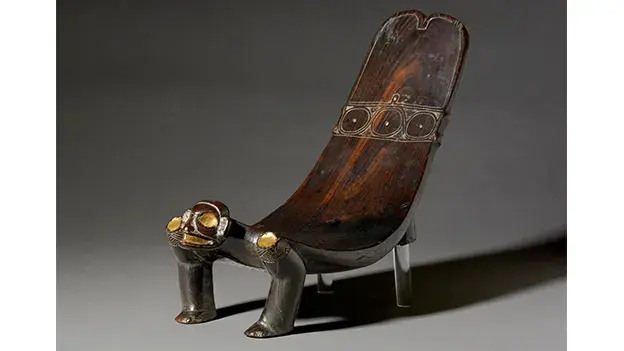
A Cacike(Chief) or Tekina (Leader) is not made in a single moment nor is a chief or leader ever self-appointed. Leadership is shaped by service, tested by responsibility, and recognized by the people in his or her community when the time is right.
Among Arawak Taíno communities, the making of a chief carries deep meaning. There are several Yucayekeno (villages) with their own protocols, ceremonies, and traditions regarding apoointing leadership. Even with the differences there can be found commonalities rooted in our ancestral indigenous traditions.
Being appointed as a Cacike is not only a public honor. It is a spiritual and cultural responsibility. The ceremony marks more than a title. It acknowledges a person who has accepted the work of protecting the people, honoring the ancestors, keeping the teachings, and serving the generations still to come to the best of their ability.
The making of a chief ceremony asks everyone present to remember that leadership is not ownership. It is guardianship. A Cacike stands at the center only so they can better serve the circle.
Leadership begins long before the ceremony
In many Indigenous traditions, ceremony confirms what the community has already seen. A person does not become ready because someone places a headress on their head or when a Atrata (Clan Mother) speaks a blessing over the person. Those outer signs matter and are an integral part of ceremony, but they point to something older and deeper.
A future Cacike or Tekina is watched over time.
People notice how they listen. They notice whether they speak with humility. They notice how they respond when there is conflict, grief, hunger, celebration, or uncertainty. They see whether the person shows up when no one is praising them. They see whether the work continues when it becomes tiring. They look for what is being done behind the scenes when noone is looking.
A ceremonial recognition may be public or within the confines of the ceremonial grounds of each Yuceyeke, but the preparation is often quiet.
It can include years of learning from elders, sitting with oral history, practicing community care, studying our ancestral language and even creating new songs. Helping with gatherings, protecting cultural spaces, and learning how to carry authority without letting authority harden the heart or puff up the head.
The role calls for Nacan (balance). A chief may need to speak firmly, but not cruelly. They may need to make decisions, but not ignore counsel. They may need to represent the people beyond the community, but never forget the people are not a platform.
"The true measure of a leader is marked by the service to their people, not just the ceremony." Cacike AmaHura

The meaning of Arawak Taíno leadership
The words used for leadership vary across communities, families, and cultural lineages. Many people know the word cacique, although we write it Cacike, often used in Spanish historical sources to describe Indigenous chiefs in the Caribbean. Taíno communities may also use language connected to their own teachings, local practice, and family tradition which include dialect differences such as the word Tekina (Leader).
Because Indigenous nations and communities are not all the same, no single article can speak for every Arawak Taíno person or Caney (ceremonial long house). Protocol belongs to the people who learn it, carry it, and live it. Our people are a people of order and there are protocols, or some might say traditions, that are a part of daily living and walking in a sacred way. Sacred knowledge should always be handled with care and protected from those who would want to exploit it. These are things that govern our day to day lives but a Cacike has to be relational.
A Cacike or Tekina carries duties in seven sacred directions.
They carry responsibility to the ancestors, whose lives, struggles, and wisdom made survival possible.
They carry responsibility to the living community, including elders, children, families, and those who feel disconnected from their heritage.
They carry responsibility to the land and waters, because culture is not separate from place and it is our ancestral duty to protect the earth and our sacred places.
They carry responsibility to truth, especially in the face of histories that tried to erase Indigenous presence or make attempts that try to rewrite history.
They carry responsibility to our native history, researching, learning and relearning our past in order to make better decision for our future generations.
They carry a responsbility to their Yuceyeke of carrying themselves with honor, respect, and the ability to speak well and clearly on behalf of the people. Early explorers wrote about the great oratory skills of the chiefs and leaders. A tradition that is slowly diminishing with each generation.
They carry a responsibility to our ancestral language and keeping it spoken to the best of their ability. Our language ties us to the land and the people and is a pillar of our identity as indigenous people of the Carribean. It wasnt that long ago that many tribes in the United States required that their Chiefs, by tradition, by able to speak their ancestral language.
Cacikebo Yukibo Revitalizing the Taino Language
Cacike Yukibo is the Principle Chief of our Yucayeke. He as dedicated half of his life to revitalizing our ancestral language. This following video takes place at the Northwest Indian Language Institute (NILI) revitalization program for Native American languages at the University of Oregon. Dr. Richard Morrow Porrata gives a narrative on the Taino language and sacramental records at the San German de Auxerre Church in Puerto Rico, which holds records identifying parishioners from the 1700's as Indio.
Why Ceremony Matters
Ceremony gives shape to memory. It gathers what people know in their hearts and places it into a shared moment.
Ceremony reminds everyone that leadership is accountable. A Cacike or Tekina does not walk alone. They walk with elders, helpers, family, spiritual guides, and the people who will speak honestly when correction is needed.
Without ceremony, important changes can pass quietly. A person may begin carrying more responsibility, but the community may not pause to acknowledge the shift. Ceremony creates that pause. It tells the people, “Something sacred is happening here. Pay attention.”
A Cacike or Tekina ceremony can include prayer, blessing, song, offerings, words from elders, symbolic items that are gifted, community witness, and celebration. The exact form and traditions depends on the Yucayeke and its protocols. Some elements may be public. Others may be private. Some knowledge belongs only to those who have been prepared to receive it.
That boundary should always be respected and honored.
Modern audiences are often curious about Indigenous ceremonies. Curiosity can be healthy when it comes with humility. The goal should not be to collect details or treat ceremony as performance. The goal should be to understand the values that ceremony protects.
Those values often include:
Respect for elders
Elders hold memory, correction, and blessing. Their presence connects the ceremony to generations before.
Responsibility to community
Leadership is not a personal promotion. It is calling to a life of duty.
Spiritual grounding
Ceremony reminds the leader that authority must answer to something greater than the self. Not only being spiritually grounded but also spiritually accountable.
Continuity
Each generation receives teachings and must decide whether to carry them well or allow pieces of our past to die. Through ceremony the generations are taught that we are still here and strong as a people.
Accountability
Public recognition creates public responsibility.

The Role of Elders and Witnesses
No chief or leader makes themselves chief. Recognition comes through the people and this is also part of the public ceremony.
Elders play a central role because they help guard the meaning of the moment. Their responsibility is not only to praise. It is also to discern. They ask whether the person has shown patience, respect, courage, and commitment. They may speak about the person’s path, the struggles they have faced, and the duties they must now accept.
Witnesses also matter. A ceremony is not private ambition dressed in public form. The people who gather become part of the record. They hear the promises. They see the blessing. They understand that a new level of responsibility has been named.
Witnessing is not passive. It asks the community to support the leader, but also to help keep the leader aligned. A healthy community does not place all of its hope in one person. It surrounds the leadership with counsel, truth, prayer, and shared work.
This is one reason the circle is such a powerful image and why it is present in our ceremonies and dances. In a circle, every person has a place. The Cacike or Tekina may hold a specific role, but the circle reminds everyone that no one stands outside the responsibility of caring for the people.
Symbols of Responsibility
Ceremonies often use symbols because symbols speak beyond ordinary language. A cermeonial staff, guaraguao feathers, gourd vessels, ceremonial stones, sacred fire, living waters like a river, or other natural elements like burning tabacu and tabonuco also carry deep ancestral meaning. The exact symbols and ceremonies belong to the community that uses them. These are just basic examples.
A symbol is never just decoration. It teaches.
A staff may remind a leader to stand upright and steady. Water may remind everyone of cleansing, life, and movement. Fire may call attention to protection, warmth, and spiritual presence. A woven item may speak of many strands becoming one strength. A seat or place of honor may show respect, but it also reminds the person that honor comes with burden.
The most important symbol is often the leader’s own conduct.
If a person carries beautiful objects but does not carry humility, the ceremony loses its truth. If a person receives recognition but forgets the people, the symbols become empty. The outer form must match the inner life.
"A ceremony acknowledges a leader, but how they live their life with that responsibility establishes their name in the community." Cacike AmaHura
A Ceremony Rooted in Survival
Island Arawak identity carries a history marked by survival. European colonization brought violence, salvery, disease, displacement, spiritual attack, and written histories that often claimed Indigenous Caribbean people had disappeared. Yet families, communities, words, foods, stories, spiritual practices, and ancestral memory continued.
That survival is not an abstract idea. It lives through people who kept knowledge in kitchens, gardens, songs, names, and family stories. It lives through those who remembered where they came from even when public recognition was denied. It lives through communities rebuilding, teaching, gathering, and reclaiming what was never truly gone.
A Cacike or Tekina ceremony stands within that larger story.
To recognize a leader is also to say that the people still exist. The culture still breathes. The ancestors are still honored. The next generation still has something to inherit.
That does not mean the work is simple. Cultural restoration requires honor and extra care. Communities must separate living knowledge from romantic fantasy, colonial records from community memory, and public education from sacred responsibility. A Cacike or Tekina may be called to help with that difficult work because they should be a living resource of ancestral knowledge.
They may need to protect the community from outside misuse. They may need to correct false information. They may need to support youth who are learning identity in a world that often asks them to prove who they are. They may need to build bridges with other Indigenous communities while honoring the distinct path of their own people.

The Promises a Leader Carries
A leader’s promises may be spoken in formal words, or they may be understood through the ceremony itself. Either way, the heart of a leaders commitment is service.
A Cacike or Tekina promises to listen before acting. Listening is more than hearing words. It means making space for elders, youth, families, and those who carry pain. It means paying attention to what is said and what is left unsaid.
A Cacike or Tekina promises to protect the dignity of the people. That includes protecting cultural knowledge from misuse. It includes speaking carefully in public. It includes refusing to turn identity into spectacle.
A Cacike or Tekina promises to seek wisdom. No leader knows enough alone. Counsel keeps leadership from becoming prideful. Elders, cultural teachers, spiritual guides, and community members all help shape wise decisions.
A Cacike or Tekina promises to serve beyond convenience. Community work often happens when resources are thin and emotions are strong. A leader must be willing to carry responsibility when the work is not easy.
A Cacike or Tekina promises to remember the children. Every decision teaches the next generation what leadership looks like. Children learn from speeches, but they learn more from behavior.
The Community Receives Responsibility
It can be tempting to think of a a Cacike or Tekina ceremony as something that happens to one person. In truth, it happens to the whole community or Yucayeke.
When a Cacike or Tekina is recognized, the people must ask what support looks like from their leaders. Does the leader have helpers? Are elders being cared for? Are young people being taught? Are the warriors being taken care of? (1st responders, military, EMT's, Fire-Fighters, and veterans).
A strong leader needs a strong circle.
That circle may include ceremonial helpers, cultural teachers, story-tellers, singers, organizers, language learners, and people who simply show up early and stay late. Not every role is visible, but every sincere role matters. In the dialect of Las Indieras the word in our language for this type of help is Taibo: great help.
The ceremony reminds the people that leadership is collective. One person may carry a title, but cultural survival takes many hands.
Walking After Ceremony
The day after the ceremony is when the work continues.
There may be joy, photographs, meals, songs, and embraces. There may be memories that stay with people for the rest of their lives. Yet the true meaning of the ceremony appears over time. It appears when the leader chooses patience during disagreement. It appears when they honor elders even when correction stings. It appears when they protect sacred teachings from careless exposure. It appears when they serve quietly and consistently.
A Cacike or Tekina must keep learning. Recognition does not end growth. It increases the need for growth. The more visible the role becomes, the more carefully the leader must walk.
That walk includes humility. Humility does not mean weakness. It means remembering that the role is bigger than the person holding it. This is why it is not recommended by some elders for a younger person to be put into leadership positions. There are exceptions but wisdom, experience, knowledge, and understanding, and the ability to recieve wise counsel are keys to becoming a leader that is respected and honored.
Being a leader also includes unwavering courage to stand by the convictions held near the heart. A leader may need to take a stand, defend the community, speak against harm, or guide people through hard choices. Courage without humility can become harsh. Humility without courage can become silence.
A Cacike or Tekina needs both.
A Living Commitment

The making of a Cacike or Tekina is not only about the past. It is about the future being shaped right now. When it comes to being appointed as a Cacike the title and responsibility lasts a lifetime. This is the traditional way of our people.
For Island Arawak Taíno communities, ceremonies of recognition help affirm identity, restore continuity, and teach younger generations that leadership is sacred work. They remind the people that survival is not only something to remember. It is something to practice and live out.
A Cacike or Tekina ceremony asks one person to step forward. It asks the community to witness. It asks the ancestors to be honored. It asks the future to be protected.
The title may be spoken in a single day, but the responsibility must be lived every day after. A true Cacike or Tekina carries the people with care, stands with humility, and keeps the sacred fire of remembrance alive for those still on the path of healing, restoration, and wholeness.
Han han catu!


Comments